
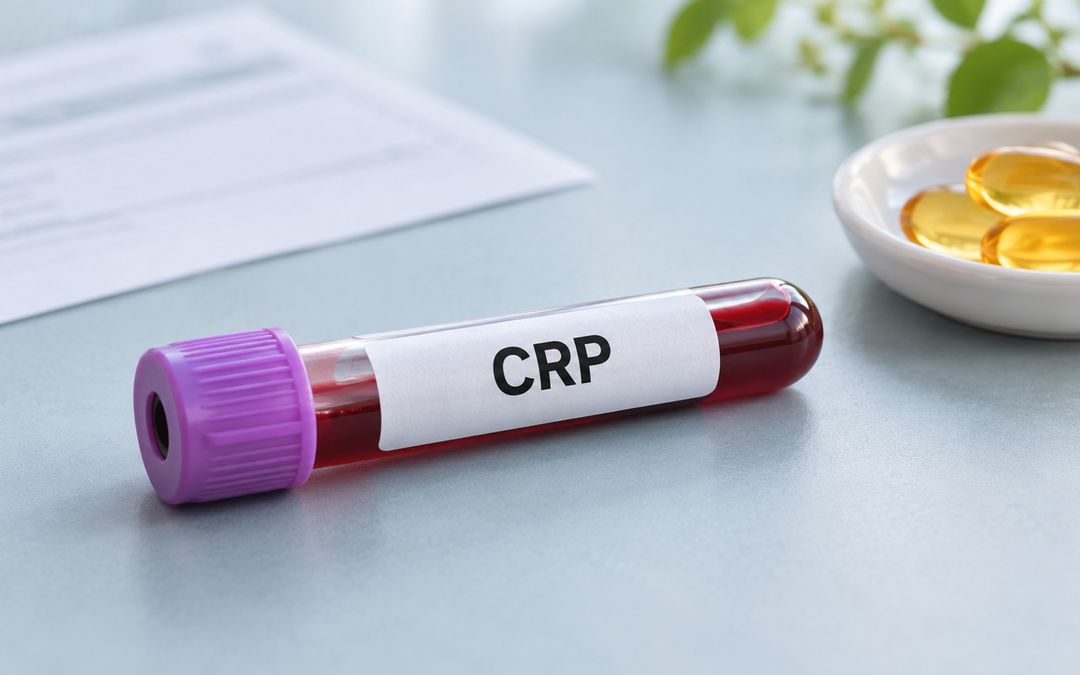
You open your bloodwork results and see three letters you weren’t expecting: CRP. Maybe the number is flagged. Maybe you’ve heard that inflammation is bad for your heart and that fish oil can bring it down. Before you buy a bottle or worry about the result, ask a more practical question. What was my clinician looking for when they ordered the test? The answer changes how you read the number and what you do next.
Inflammation is part of how we heal.
Think about the last time you scraped your knee. The skin around the scrape may have turned red, warm, and a little swollen. That short-term response helps your body deal with an injury and begin repairing tissue. Inflammation is part of your defenses. It comes into play when you’re fighting an infection, too. medlineplus.gov Inflammation can also persist. Conditions such as rheumatoid arthritis or inflammatory bowel disease can keep the immune system active over time. During an inflammatory response, signals from the immune system prompt the liver to make more C-reactive protein, or CRP. Some of that protein circulates in the blood, where a lab can measure it. medlineplus.gov Think of CRP as a clue your clinician can put together with your symptoms and medical history. A high result can have several explanations, including a recent infection or a flare of an inflammatory condition. The result alone cannot tell you where the inflammation is coming from. If you’ve had a stiff hip or an aching back for months, that one number can’t explain what’s causing your pain. medlineplus.gov
Standard CRP and high-sensitivity CRP
Both tests measure the same protein. A standard CRP test is often ordered when a clinician suspects an infection or wants to monitor an inflammatory condition. A high-sensitivity CRP test, written as hs-CRP, measures low concentrations more precisely. Clinicians sometimes use it alongside cholesterol, blood pressure, smoking history, diabetes, and other factors to assess cardiovascular risk. medlineplus.gov
Current U.S. cardiovascular guidelines identify an hs-CRP of 2 mg/L or higher on more than one occasion as a factor that can refine risk assessment in certain adults. An infection or another identifiable cause can change how the result is interpreted. The units also matter. A result of 3 mg/L is equivalent to 0.3 mg/dL. If you’re comparing an old result with a new one, check the test name, units, and reference range first. jacc.org
Can fish oil lower CRP? Fish oil provides two omega-3 fats called EPA and DHA. The body uses these fats to make signaling molecules, including some that help bring an inflammatory response to a close. Researchers have found that taking marine omega-3s can change some of those signals. Whether those changes translate into a lower CRP reading is a separate question. pubmed.ncbi.nlm.nih.gov

A 2022 review that brought together 32 meta-analyses found that omega-3 supplementation lowered CRP on average, but results varied considerably. The research covered people with different health conditions, and studies used different doses and durations. In a separate analysis from the randomized VITAL trial, older U.S. adults who took marine omega-3s for one year had no statistically significant overall reduction in hs-CRP compared with those taking a placebo. pubmed.ncbi.nlm.nih.gov So what difference might you actually notice? A change on a lab report and a change in how you feel are two separate outcomes. Studies measuring CRP don’t tell you whether a fish oil capsule will make it easier to walk around the block or get out of bed with less stiffness. Fish oil may lower CRP in some people, and the range of findings makes it hard to predict who will see a change. pubmed.ncbi.nlm.nih.gov Where omega-3s have a clearer role The evidence is clearer for lowering high triglycerides, a type of fat that circulates in the blood. Clinicians can prescribe specific omega-3 products for that purpose. One prescription EPA product, icosapent ethyl, has also been shown to reduce certain cardiovascular events in eligible high-risk patients already taking a statin. Those findings apply to a specific medicine and patient group. Omega-3 Fatty Acids
If you enjoy fish, dinner is a simple place to start. The American Heart Association recommends two servings of fish per week, especially oily fish such as salmon or sardines. If you’re considering a supplement, look at the amounts of EPA and DHA on the label. A capsule marked “1,000 mg fish oil” can contain substantially less than 1,000 mg of EPA and DHA combined. Talk with your clinician or pharmacist before adding a supplement if you take an anticoagulant or antiplatelet medication or have a history of atrial fibrillation. Some large trials found a small increase in atrial fibrillation with high-dose omega-3s in people with cardiovascular disease or at high cardiovascular risk. American Heart Association
If CRP shows up on your next lab report, bring one question to your appointment. “What do you think is driving this result, and would repeating the test change what we do?” If fish oil comes up, ask what it’s meant to accomplish in your case. Lowering high triglycerides, getting more omega-3s in your diet, and understanding a raised CRP are three different goals. Knowing which one you’re working on helps you decide what belongs on your plate and what warrants a conversation with your clinician.
Be Simply Fit