
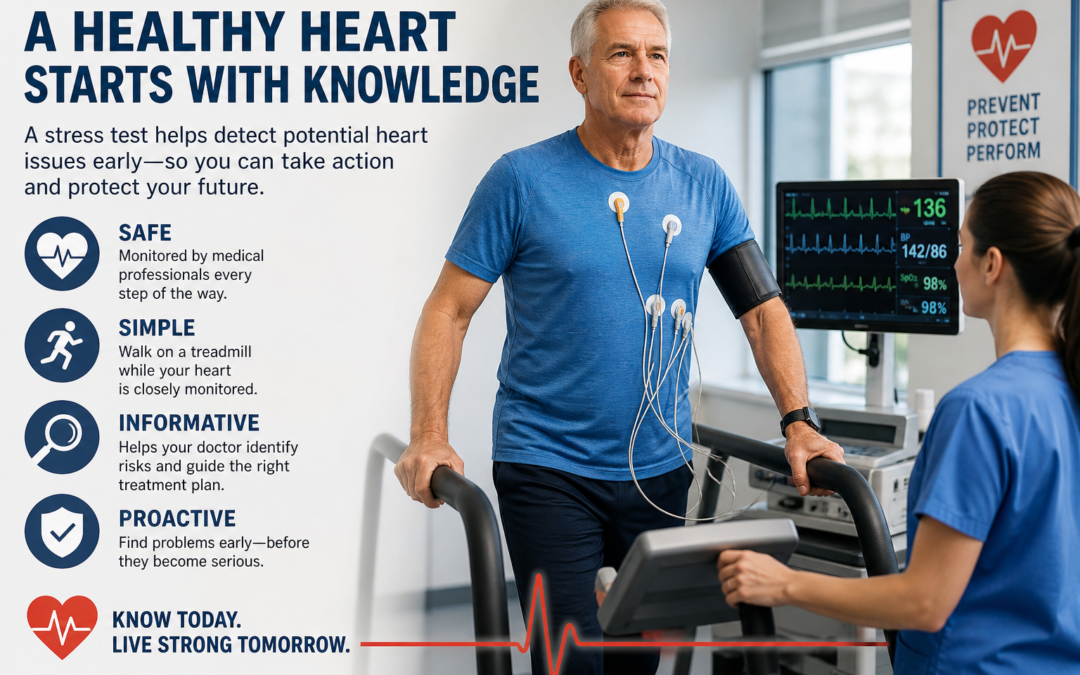
A cardiac stress test is one of the most valuable tools your doctor has to evaluate how well your heart is functioning—especially when it’s working, not just when you’re sitting still. For many people, the idea of a “stress test” can sound intimidating, but understanding the purpose and process can take away much of that fear. In reality, it is a safe, controlled, and proactive way to protect your health and, in many cases, your life.
First, let’s talk about what a stress test actually is. A stress test measures how your heart responds to physical activity. When you exercise, your heart needs more oxygen, which means it has to pump more blood. If there are any blockages or inefficiencies in your heart or blood vessels, they often show up when the heart is under stress. Think of it this way: your heart might look fine at rest, but when challenged, it reveals how strong and efficient it truly is.
So why would your doctor recommend a stress test? There are several reasons. You might be experiencing symptoms such as chest discomfort, shortness of breath, unusual fatigue, or dizziness. In other cases, your doctor may recommend it because of risk factors like high blood pressure, high cholesterol, diabetes, a history of smoking, or a family history of heart disease. For many of my clients—especially those over 55—it becomes a proactive step, not just a reactive one. It helps identify potential issues before they become serious problems.
Now, let’s ease your mind by walking through what actually happens during the test.
When you arrive, a technician will place small adhesive electrodes on your chest. These are connected to an electrocardiogram (EKG), which monitors your heart’s electrical activity. You’ll also wear a blood pressure cuff so your readings can be taken throughout the test. This part is completely painless.
Next comes the exercise portion. Most commonly, you’ll walk on a treadmill. The speed and incline will gradually increase every few minutes. You are not expected to run a marathon—far from it. The goal is simply to elevate your heart rate in a controlled manner. The medical team is watching you closely the entire time, monitoring your heart rhythm, blood pressure, breathing, and how you feel.
If you are unable to walk on a treadmill due to joint issues or other limitations, don’t worry. There are medication-based stress tests where a drug is used to simulate the effect of exercise on your heart. This ensures that everyone can be tested safely, regardless of fitness level.
During the test, your job is simple: communicate. If you feel any discomfort—chest pain, shortness of breath, dizziness—you let the team know immediately. In fact, the test is often stopped at the first sign of concern. This is not about pushing through pain; it’s about gathering information safely.
So what is the doctor looking for?
They are evaluating several key things:
- Heart rhythm: Is your heartbeat steady or irregular under stress?
- Blood flow: Does your heart receive enough oxygen-rich blood when it’s working harder?
- Exercise capacity: How well does your heart handle increased demand?
- Symptoms: Do any concerning signs appear during exertion?
Abnormal results might indicate conditions such as coronary artery disease (blockages in the arteries), arrhythmias (irregular heartbeats), or reduced heart function. The important thing to understand is that identifying these issues early gives you options—lifestyle changes, medication, or further testing—before a serious event like a heart attack occurs.
This is where the proactive value of a stress test really shines. It’s not just about diagnosing a problem; it’s about preventing one. Many people walk around feeling “fine,” yet underlying issues can exist silently. A stress test can uncover these hidden risks and allow you and your doctor to take action early. That might mean adjusting your exercise program, improving your nutrition, managing stress better, or beginning a medical treatment plan.
As someone who has personally trained for and gone through major heart surgery, I can tell you this: knowledge removes fear. When you understand what’s happening in your body, you regain a sense of control. That’s a powerful place to be.
It’s also important to connect this to something I talk about often—overall fitness. True health is not just physical; it includes mental and emotional readiness as well. When you approach something like a stress test with understanding rather than fear, you are practicing what I call emotional fitness—the ability to face life’s challenges with confidence and clarity .
In closing, a stress test is not something to fear—it’s something to appreciate. It is a window into your heart’s health, a tool that helps you stay ahead of potential problems, and a step toward living a longer, stronger, and more confident life. If your doctor recommends one, see it for what it truly is: an opportunity to take control of your health and move forward with greater peace of mind.