
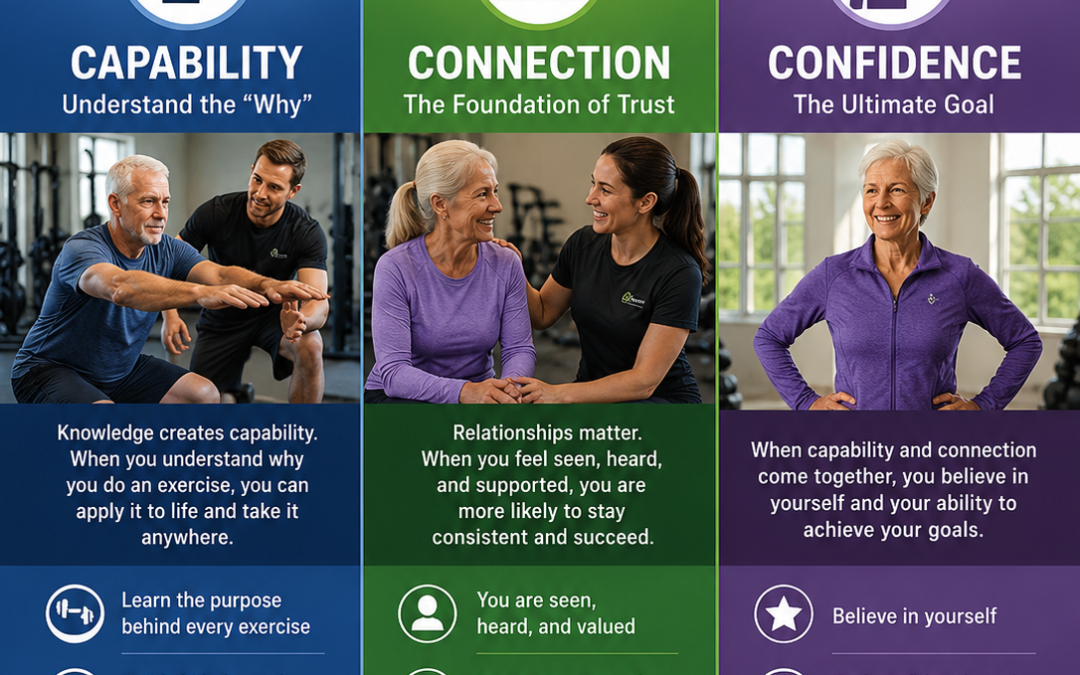
When most people think about exercise, they think about weight loss, strength, or improving their health. While those outcomes are certainly important, there are three principles that I believe are even more important to long-term success. I call them the Three C’s of Exercise: Capability, Connection, and Confidence. As a personal trainer, these are the three qualities I want every client to develop. If we focus only on sets, repetitions, and calories burned, we miss the bigger picture. Exercise should help you become capable of living life independently, connected to someone who genuinely cares about your success, and confident enough to continue your journey on your own.
Capability: Understanding the “Why”
The first goal of any exercise program should be capability. I want my clients to understand not only what they are doing, but why they are doing it. Every exercise has a purpose. A squat is not just a squat. It helps you get out of a chair more easily. A row is not just a pulling exercise. It helps improve posture and makes daily activities easier. Balance exercises are not simply gym activities; they are insurance policies against falls. Many people exercise without understanding how the movements relate to their daily lives. As a result, they become dependent on someone else to tell them what to do. My goal is exactly the opposite. I want every client to become educated and empowered.
When you understand why an exercise is important, your motivation changes. You no longer exercise because someone told you to. You exercise because you understand the benefit. I often remind my clients that they cannot take the gym with them. What they can take with them is knowledge. When they understand proper technique, exercise selection, and the purpose behind each movement, they become capable of exercising anywhere and adapting to life’s challenges.
Capability creates independence, and independence creates freedom.
Connection: The Foundation of Trust
The second C is connection.
Exercise is about far more than muscles and machines. It is about relationships. Before clients trust a trainer with their health and well-being, they need to know that the trainer genuinely cares about them as a person. People want to be seen, heard, and understood. They want someone who listens to their concerns, understands their fears, and appreciates their goals. Many people begin an exercise program carrying emotional baggage. They may have experienced injuries, health scares, failed diets, or years of frustration. Some have lost confidence in themselves and are uncertain whether they can succeed. A strong connection between trainer and client creates an environment where people feel safe. They know they can ask questions. They know they can admit when something hurts. They know they can express concerns without fear of judgment. When clients feel connected, they are more likely to remain consistent. They know someone is invested in their success and genuinely wants the best for them.
As a trainer, I view my role as more than simply prescribing exercises. I want to understand your goals, your challenges, and the activities that bring you joy. Whether you enjoy hiking, golfing, pickleball, gardening, traveling, or simply playing with your grandchildren, those interests matter because they help shape your program.
Connection creates trust. Trust creates commitment. Commitment creates results.
Confidence: The Ultimate Goal
The third and perhaps most important C is confidence.
Confidence is what happens when capability and connection come together. When clients understand what they are doing and trust the person guiding them, something remarkable begins to happen. They start believing in themselves. Confidence is not arrogance. Confidence is the quiet belief that says, “I can do this.” It is the confidence to walk into a gym without feeling intimidated.
It is the confidence to exercise independently when a trainer is not present. It is the confidence to try new activities and challenge yourself physically. It is the confidence to trust your body again. Many people underestimate how important confidence is to their overall health. A person who lacks confidence may avoid exercise, social activities, travel, or experiences they once enjoyed. On the other hand, a confident person is more likely to remain active, take healthy risks, and continue pursuing personal growth.
One of the greatest compliments I can receive from a client is not that they lost weight or lifted more weight. It is when they tell me, “I can do this on my own now.” That statement tells me we have accomplished something meaningful. It means the client has developed the skills, understanding, and belief necessary to continue their journey independently.
Bringing the Three C’s Together
The Three C’s of Exercise work together to create lasting success:
Capability gives you the knowledge and skills to exercise effectively.
Connection provides the trust and support needed to stay committed.
Confidence allows you to take ownership of your health and continue moving forward independently.
My goal at Be Simply Fit has never been to create dependence. My goal is to help people become stronger, healthier, and more self-reliant. I want every client to understand their body, trust the process, and believe in their ability to succeed. Exercise is not simply about building stronger muscles. It is about building stronger people. When you become capable, connected, and confident, exercise becomes much more than a workout. It becomes a pathway to greater independence, better health, and a richer quality of life.
And that is what true fitness is all about.