
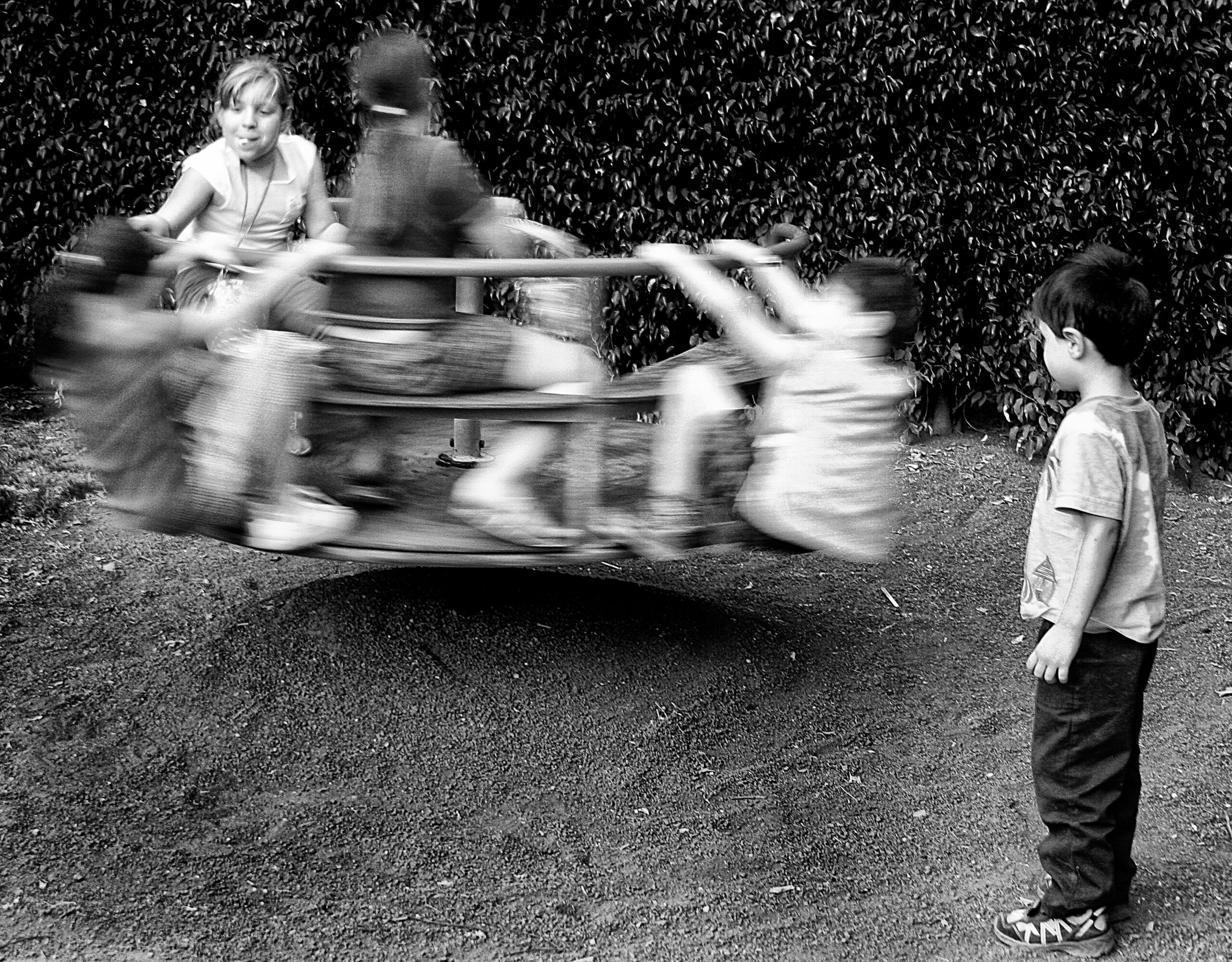
What Children Learn When We Let Them Play, Compete, and Solve Problems
Several years ago, a New Hampshire school district made headlines when it voted to ban dodgeball and other “human target” sports. The concern was that games in which children throw balls at one another seemed inconsistent with the district’s efforts to reduce violence and bullying. I certainly understand the concern. As adults, we have a responsibility to ensure the safety of our children and to take reasonable steps to help them cope with bullying in school and in their communities.
But I believe there is another side to this discussion.
In our desire to protect children, we need to be careful that we don’t protect them from the very experiences that can help them develop resilience, confidence, social skills, and the ability to solve problems on their own. Children need opportunities to compete. They need to learn how to win and how to lose. They need to deal with disagreements, disappointment, frustration, and personalities that may not always be pleasant. They need something I call playground politics.
The Lessons We Learned on the Playground
As a young boy, on any given summer day I would leave my house early in the morning with a bat, a ball, and a glove and play baseball until the sun went down. There was no adult supervision. There was just a gang of guys playing ball together. We had a couple of bucks in our pockets for a soda and a hot dog. We took breaks, welcomed other kids who wanted to play, worked on our skills, made our own rules, settled our own disagreements, and generally had a great time.
Did we all get along?
Of course not.
Were there bullies among us?
You bet.
Did we sometimes experience fear or intimidation because of those kids?
Absolutely.
But most of us stayed and played. We solved problems. We learned how to get along. We figured out who could hit, who could field, who could run, and who needed a little more practice. Without realizing it, we were learning lessons that would last a lifetime. We were learning playground politics.
I am not a proponent of bullying, nor do I believe bullying is some necessary rite of passage. When genuine bullying occurs, adults need to intervene. But one of the goals of any anti-bullying effort should also be to strengthen children. We need to give them the social and emotional skills necessary to handle conflict, disappointment, competition, and difficult people. After all, those things don’t disappear when childhood ends.
Life Is Not Always Win-Win
My daughter Grace played on a traveling soccer team. At the conclusion of one season, she and every other member of the team received a trophy at an end-of-season party. Grace never missed practice. She attended every game, worked hard, and was named the team’s MVP. She received an additional trophy for that accomplishment. On the way home she said to me, “Dad, about half of the team missed practices, didn’t go to some games, and really never gave their best effort when they played. How do they deserve a trophy?”
It was a fair question.
There is nothing wrong with recognizing participation, particularly with very young children. But at some point, children also need to understand that effort, commitment, improvement, and achievement matter. Everyone cannot win every time. If that were true, we wouldn’t have a Super Bowl, a World Series, spelling championships, academic honors, job promotions, or elections. The playing field of life isn’t always level.
As a boy, I knew I didn’t have the same baseball skills as some of my teammates. I respected the kids who were better than I was. Instead of believing their ability somehow diminished me, I practiced and tried to improve. The satisfaction came from knowing I had worked hard and given my best effort. We didn’t always win. In fact, we lost plenty of games. But losing taught us something too. Losing teaches children that disappointment is survivable. It teaches them to evaluate what went wrong, work harder, improve their skills, congratulate the winner, and come back tomorrow ready to play again.
That’s resilience.
Competition Is a Good Thing at Any Age
Adults compete all the time. We compete for jobs, promotions, academic recognition, business opportunities, and countless other things. Competition is part of life. Children need opportunities to experience healthy competition long before they enter the adult world. When we eliminate games simply because someone might lose, be picked last, miss a shot, strike out, or feel disappointed, we may unintentionally teach children that uncomfortable emotions should always be avoided.But disappointment isn’t necessarily harmful.
Sometimes disappointment is a teacher.
Healthy competition helps children discover their strengths and weaknesses. It gives them a reason to practice. It teaches perseverance and helps them understand that success usually requires effort.
The answer isn’t to eliminate competition.
The answer is to teach children how to compete well.
Playground Politics Teaches Respect for Ability
Some kids can run faster. Some jump higher. Some are naturally stronger or more coordinated. Others may have exceptional academic, musical, artistic, or interpersonal abilities. Children recognize these differences very quickly. On the playground, if the child who was “it” during a game of tag happened to be the fastest runner in school, everybody knew that child probably wasn’t going to remain “it” very long. His speed was respected. The same thing happened in baseball. Nobody wanted to see the team’s best hitter come to the plate with the bases loaded when you were trying to protect a one-run lead.
That wasn’t low self-esteem.
It was recognizing ability.
Children need to learn that someone else’s talent does not diminish their own worth. They can admire another person’s abilities without feeling inferior. That’s an important lesson because throughout life we will encounter people who are smarter than we are, stronger than we are, more talented than we are, or more successful in a particular area. Emotional maturity means being able to say, “That person is very good at what they do,” without becoming jealous, resentful, or threatened.
Playground Politics Teaches Kids How to Make Friends
Kids want and need friends, but learning how to make and keep friends can be difficult. Pickup games of basketball, football, baseball, kickball, tag, and other activities can help children develop these skills naturally. I’m not talking about organized travel sports or highly structured leagues. I’m talking about children getting together at recess or in a neighborhood and organizing a game themselves.
Who is playing?
What are the teams?
What are the rules?
Was the ball in or out?
Was the runner safe?
What happens when someone argues?
Children used to answer these questions themselves.
And in doing so, they practiced negotiation, compromise, leadership, communication, conflict resolution, and friendship.
Adults don’t have to solve every disagreement. Sometimes children need enough space to work through minor conflicts themselves, with adults available when the situation truly requires intervention. There is also something different about playing simply because you love the game. Once adults become heavily involved, the focus can shift toward winning, statistics, playing time, rankings, scholarships, and expectations. What started as fun can become a source of anxiety. Free play offers something organized sports sometimes cannot:
Ownership.
The game belongs to the kids.
The Playground Teaches Balance and Academic Consistency
Children weren’t designed to sit in chairs for an entire day. Yet schools face enormous academic pressure. Teachers have standards to meet, assessments to administer, and curriculum requirements to complete. As instructional demands increase, physical activity and recess can become casualties. But reducing movement may actually work against what we’re trying to accomplish. When children know they will have an opportunity to move, play, socialize, and release some energy, they may be better prepared to concentrate when it is time to work.
I have described this as the difference between a scarcity mentality and an abundance mentality. When movement becomes scarce, children may try to steal opportunities to move during instructional time. They fidget, talk, wander, and create their own stimulation. But when children know that movement and play are a predictable part of their day, there is less reason to fight for those opportunities during class.
Years ago, finishing your work might have meant getting a few extra minutes outside. Today, finishing your work often means getting more work.
Children need balance.
Academic development matters, but so do physical, social, and emotional development. Free play contributes to all three.
Coaching Is About More Than Sports
If we want children to develop healthy social skills, adults have to coach them through life one step at a time.
We need to teach them how to lose gracefully.
We need to teach them how to win without humiliating someone else.
We need to teach friendship skills.
We need to teach them how to compete respectfully and responsibly.
We need to teach them how to solve interpersonal problems.
And we need to allow enough room for productive conflict.
Not every disagreement is bullying.
Not every uncomfortable interaction requires adult intervention.
Not every loss damages self-esteem.
And not every childhood problem needs to be immediately removed.
Sometimes children need guidance rather than rescue.
Certainly, when a child is deliberately and repeatedly intimidating, humiliating, threatening, or harming another child, adults need to intervene. But the behavior of a bully shouldn’t automatically eliminate an activity that many other children enjoy.
Address the behavior.
Teach the child.
Protect the victim.
Establish clear boundaries and consequences.
But whenever reasonably possible, let the children keep playing.
Let Them Play
Playground politics isn’t really about dodgeball. It’s about preparation for life. Children need safe opportunities to experience winning, losing, negotiating, cooperating, disagreeing, making friends, solving problems, and recognizing the abilities of others. They need adults who protect them from genuine harm while still giving them enough freedom to develop confidence and resilience. There is a difference between protecting a child and preventing a child from ever experiencing discomfort.
Discomfort is part of growth.
The playground can be one of life’s first classrooms. There are no desks, textbooks, or report cards, but the lessons can last forever.
So yes, supervise children.
Teach sportsmanship.
Stop bullying when it occurs.
Make games reasonably safe and inclusive.
But don’t eliminate every game because someone might lose, become frustrated, or experience a difficult moment.Sometimes the best thing we can do for children is give them a ball, give them some space, establish reasonable boundaries—and let them figure out how to play.
Because someday the playground gets much bigger.
We call it life.