I often sayI that fitness is not just physical — it is mental, emotional, and even spiritual. In Be Simply Fit, he reminds us that exercise is one of the first steps toward becoming balanced in every dimension of life. If that is true — and it is — then exercise cannot remain an afterthought. It must become a priority. The challenge is not knowing that exercise is important.
The challenge is making it non-negotiable.
Why Exercise Must Be a Priority
We schedule:
- Work meetings
- Doctor appointments
- Haircuts
- School events
- Vacations
But we often “fit in” exercise — if there’s time left. That mindset quietly communicates something dangerous: Everything else is more important than your health.
If you are not healthy:
- You cannot perform at your job.
- You cannot show up fully for your family.
- You cannot enjoy the years you worked so hard to build.
Exercise is not selfish. Exercise is stewardship.
Especially for those over 50, 60, and 70, we are not just working out for today — we are training for the next decade. Strength, balance, mobility, and cardiovascular health are protective factors against falls, joint degeneration, and heart disease.
You trained for promotions.
You trained your kids to drive.
Why wouldn’t you train your body to age well?
“I’m Too Busy” — The Real Issue
Most people are not too busy. They are too unstructured.
There are 1,440 minutes in every day.
You need 20–30 of them.
That is 2% of your day.
The issue is not time. The issue is priority.
Juggling Job and Family Without Dropping Your Health
Here is how exercise fits into real life:
- Schedule It Like a Meeting
Put it on your calendar.
Not “Workout sometime.”
But: 6:30–7:00 AM Walk.
If it’s written, it’s real.
- Wake Up 30 Minutes Earlier
The world is quiet.
No emails. No calls.
Just you and movement
Many high-performing people train early because nothing interferes.
- Protect One Evening Slot
Instead of scrolling or watching TV, commit 25 minutes to strength work.
- Involve the Family
- Walk after dinner.
- Do 10-minute mobility routines together.
- Play catch.
- Ride bikes.
Exercise becomes connection — not separation.
Your children and grandchildren don’t need a perfect role model. They need an active one.
How To Fit 20–30 Minutes Into Any Day
You do not need an hour. You need intention.
Option 1: The 30-Minute Walk
- 5 minutes easy
- 20 minutes brisk pace
- 5 minutes cool down
Walking improves:
- Cardiovascular health
- Blood sugar control
- Mood and mental clarity
- Joint lubrication
It is simple. It is powerful. It works.
Option 2: Micro-Workouts (Broken Into Pieces)
No 30-minute block available? Fine.
Do three 10-minute sessions.
Morning (10 minutes)
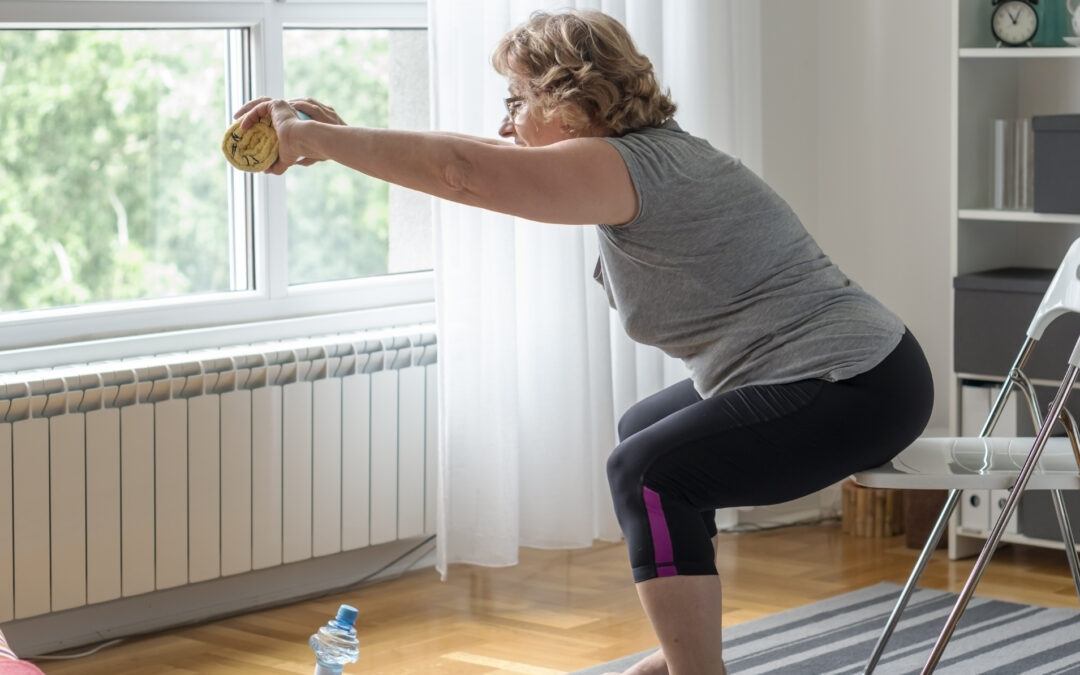
- Bodyweight squats
- Pushups (wall or floor)
- Plank
- Band rows
Midday (10 minutes)
- Brisk stair climbing
- Marching in place
- Farmer carry with dumbbells
Evening (10 minutes)
- Stretch hips and shoulders
- Balance work
- Core activation
Three small investments, one strong body.
Consistency beats intensity.
Option 3: The “Anchor Habit” Method
Attach exercise to something you already do.
- After coffee → 10 squats.
- After brushing teeth → 30-second balance hold.
- After lunch → 5-minute walk.
- After work → 15-minute strength circuit.
Stack habits. Make movement automatic.
Option 4: Commute Conversion
If you work:
- Park farther away.
- Take stairs.
- Walk during calls.
- Do calf raises while standing at your desk.
These “invisible minutes” accumulate.
Option 5: Weekend Foundation
If weekdays are tight:
- Longer Saturday session (45 minutes).
- Moderate Sunday walk.
Then maintain 15–20 minute sessions during the week.
The Emotional Shift: Identity Over Excuses
The difference between people who exercise and those who don’t is not motivation.
It’s identity. Instead of saying: “I’m trying to work out.”
Say:
- “I am someone who trains.”
- “I am someone who protects my health.”
- “I am preparing for the next decade.”
When exercise becomes part of who you are, not just what you do, priority follows naturally.
The Compounding Effect
20 minutes a day equals:
- 140 minutes per week
- 7,280 minutes per year
- Over 120 hours annually
That is the equivalent of three full workweeks invested in your health every year.
Imagine the return on that investment:
- Stronger joints
- Lower triglycerides
- Better blood pressure
- Improved confidence
- More energy
- Sharper thinking
Exercise restores agency.
It reminds you that you are not helpless against aging.
The Hard Truth
No one is coming to do this for you.
Not your doctor.
Not your spouse.
Not your trainer.
You must decide that your health matters.
Work will always demand more.
Family will always need more.
Life will always fill the calendar.
If you wait for the perfect time, you will wait forever.
A Simple Rule
Before you say, “I don’t have time,” ask yourself:
Did I spend 30 minutes on something less important today?
Most days, the answer is yes.
Final Thought
You trained for college.
You trained for a career.
You trained your children.
Now train for longevity.
Make exercise the appointment you refuse to cancel.
Twenty to thirty minutes. Daily.
Not because you feel like it.
But because you value your life.
As a senior we all should have more time, let’s not waste it. If you want to really learn how to exercise for longevity, spend a few sessions with me and I will get you started. Email me at besimplyfit23@gmail.com