There are some memories that never fade.
When I was a kid, summer mornings had a rhythm all their own. I’d get up early, grab my baseball bat, a few baseballs, and my glove, load them into the basket on my bicycle, and head to the town park. Most mornings, I was the first one there. I’d throw a baseball high into the air, catch it, hit balls to myself, run the bases, and shag fly balls until someone else arrived. Soon we’d be playing catch. Another kid would show up, and we’d take batting practice. Before long, enough kids had gathered that we’d choose sides and play baseball for the rest of the day. Those were some of the greatest classrooms I ever attended. Did we always get along? Of course not. Did we argue? Absolutely. Were there bullies? Without question. But no one packed up and went home because someone hurt their feelings. We all wanted to play too much. We worked through disagreements ourselves. We learned there was a pecking order based on ability, effort, leadership, and attitude. We accepted that some kids were stronger, faster, or better athletes than we were. We even learned how to be friends with kids we didn’t necessarily like. Without realizing it, we were learning one of life’s most valuable lessons: conflict is normal. We didn’t have adults solving every disagreement. We didn’t have parents scheduling playdates. We didn’t have referees watching every move we made. We had freedom. And with freedom came responsibility. Those long summer days helped build resilience, confidence, leadership, negotiation skills, emotional intelligence, and independence—qualities that have served us throughout our entire lives.
Exercise Was Never Called Exercise
The interesting thing is that we never thought we were exercising. We were simply playing. Yet we were running for hours, sprinting between bases, climbing fences to retrieve balls, riding our bicycles across town, and walking home only after the streetlights came on. Without knowing it, we were developing healthy hearts, strong bones, powerful muscles, better balance, and greater endurance. Today’s children are often told they need to exercise.
My generation never heard that. We simply played until we were exhausted.
Movement During Childhood Shapes the Adult You Become
One of the greatest misconceptions is that exercise only benefits children while they are young. Nothing could be further from the truth. The body remembers. Children who remain physically active develop stronger bones during their growing years, increasing bone density that may help reduce osteoporosis decades later. They build larger and stronger muscles, healthier joints, better cardiovascular systems, and improved metabolic health. Perhaps even more importantly, they establish something that cannot be measured on an X-ray or blood test: They develop the habit of movement. Children who learn to enjoy being active are much more likely to become adults who remain active. That habit may someday reduce their risk of heart disease, Type 2 diabetes, obesity, high blood pressure, stroke, certain cancers, depression, and many of the chronic diseases that plague modern society.
As someone who underwent quadruple bypass surgery, I often think back to those childhood days of constant movement. I believe those years of activity gave me a foundation that helped me recover and continue exercising today. Exercise is one of the few investments that continues paying dividends for an entire lifetime.
The Growing Crisis of Teenage Obesity
Unfortunately, today’s children face challenges that previous generations never experienced. Teenage obesity has risen dramatically over the past several decades. Many teenagers now spend hours every day sitting—in school, in cars, doing homework, playing video games, or scrolling endlessly through social media. Calories have increased. Movement has decreased. The result is predictable. Excess body weight places tremendous stress on developing joints, increases blood pressure, raises cholesterol, contributes to insulin resistance, and sets the stage for heart disease years before symptoms ever appear. Even more concerning is that obesity during adolescence often continues into adulthood, making it increasingly difficult to reverse. The answer isn’t shaming children. The answer is giving them opportunities to move again.
Cell Phones Are Replacing Childhood
Technology has given us amazing tools. Unfortunately, it has also stolen something precious. Many children today know how to navigate a smartphone better than they know how to organize a neighborhood baseball game. Instead of climbing trees, they’re climbing social media rankings. Instead of riding bicycles until sunset, they’re watching someone else ride one on YouTube. Instead of making memories, they’re collecting notifications. Cell phones are not the enemy. Excessive screen time is. Every hour spent staring at a screen is often an hour not spent developing coordination, strength, balance, creativity, friendships, and confidence. Children need scraped knees more than perfect selfies. They need sunshine more than screen light. They need conversations face-to-face instead of through text messages.
Exercise Is Medicine for the Teenage Mind
One of the greatest concerns among health professionals today is the rise in teenage anxiety and depression. There are many reasons for this complex problem, including academic pressure, family stress, social media, sleep disruption, and genetics. Physical inactivity is another important piece of the puzzle. Regular exercise stimulates the release of endorphins and other brain chemicals that improve mood, reduce stress, and support emotional well-being. Exercise also promotes better sleep, improves self-confidence, enhances concentration, and provides healthy opportunities for social interaction.
When children play together, they laugh together. They solve problems together. They lose together. They win together. Those experiences teach emotional resilience in ways that no app or social media platform ever can. Playing outside also gives children something increasingly rare: A break from comparison. On a baseball field, no one cares how many followers you have.They only care if you’re ready to play.
Play Teaches More Than Sports
Organized sports certainly have value. But children also need unstructured play. That’s where imagination develops. That’s where leadership emerges. That’s where conflict resolution is practiced. That’s where creativity flourishes. Children invent games. They negotiate rules. They compromise. They settle disagreements. They discover what they’re capable of doing without adults directing every moment. Those lessons cannot be downloaded. They must be experienced.
A Challenge for Parents
Parents today face tremendous pressures. Keeping children safe is important. So is helping them succeed academically. But perhaps one of the greatest gifts we can give our children is permission to simply play. Encourage them to ride bicycles. Throw a football. Hit baseballs. Shoot basketballs. Walk the dog. Go hiking. Play tag. Build forts. Explore nature. Laugh. Run until they’re out of breath. Get dirty. Get tired. Come home smiling. These aren’t just childhood memories. They’re investments in lifelong physical health, emotional resilience, and mental well-being.
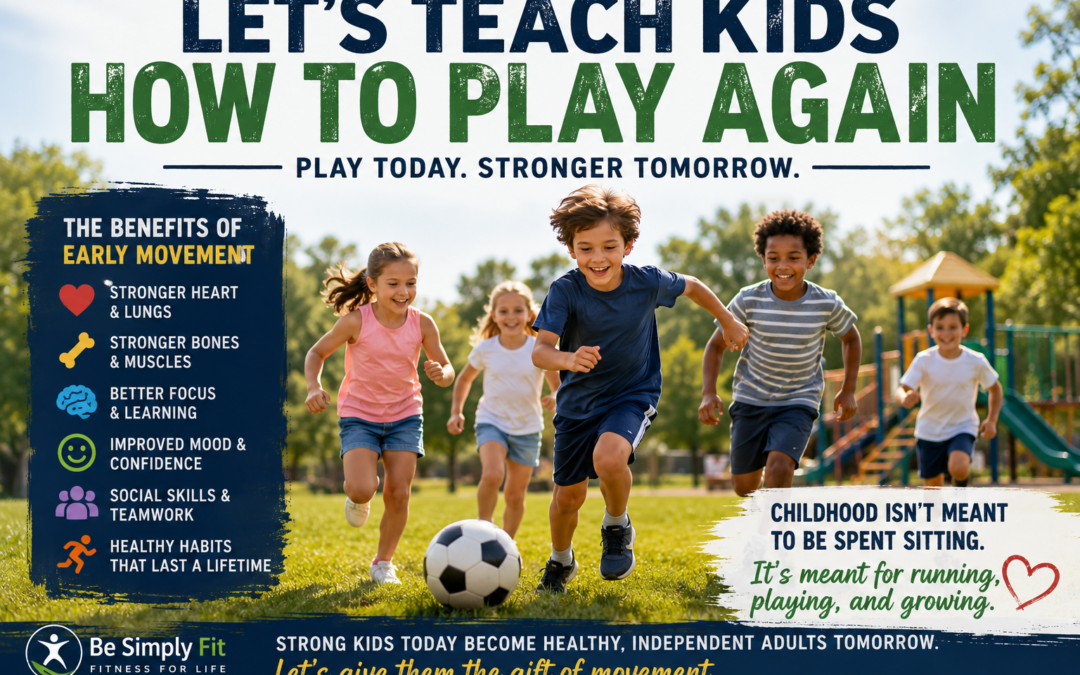
Let’s Teach Kids How to Play Again
As a NASM Certified Personal Trainer, Senior Fitness Specialist, Corrective Exercise Specialist, and someone who has spent decades helping people improve both their physical and emotional well-being, I’ve learned something important. Fitness doesn’t begin in adulthood. It begins in childhood. It begins the first time a child discovers the joy of movement. It begins when they realize exercise isn’t a chore—it’s fun. If we truly want healthier adults tomorrow, we must create healthier childhoods today. Let’s spend less time worrying about how to get adults exercising after years of inactivity… …and more time making sure today’s children never stop moving in the first place. Let’s put down the phones. Let’s step outside. Let’s throw a ball. Let’s ride a bike. Let’s climb a hill. Let’s laugh.
Most of all, let’s teach our kids how to play again.