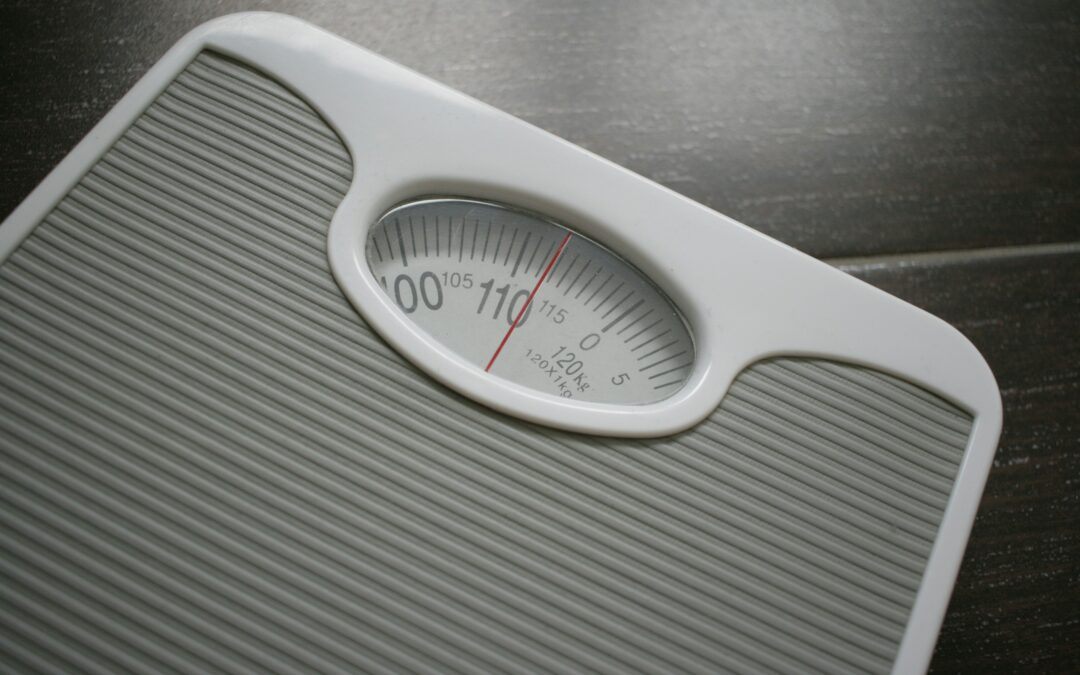
One of the biggest problems with weight gain is that it rarely happens overnight. Most people don’t wake up one morning 30 or 40 pounds overweight. Instead, the weight quietly accumulates—a pound here, two pounds there—until one day they look in the mirror, step on the scale, or visit their doctor and wonder, “How did this happen?”
I call this creeping obesity.
Creeping obesity is the gradual accumulation of body weight over months and years. Because the change happens so slowly, we adjust to it. Our clothes get a little tighter, so we buy a larger size. Walking up the stairs becomes a little harder, so we avoid the stairs. Our stomach gets a little bigger, but because we see ourselves every day, the change isn’t always obvious. The problem isn’t necessarily what happens in one month. It’s what happens when we multiply that month by several years.
One or Two Pounds Doesn’t Sound Like Much
Suppose you gain just one pound per month. At the end of a year, that’s 12 pounds. Continue for another year and you’ve potentially added 24 pounds in two years.At two pounds per month, the mathematics becomes even more concerning. That’s 24 pounds in one year and potentially 48 pounds over two years. A person who weighed 180 pounds could theoretically find themselves weighing 204 pounds after two years of gaining only a pound per month. At two pounds per month, that same person could reach 228 pounds. Real bodies don’t gain weight in a perfectly straight mathematical line—metabolism, activity, appetite, body composition, medications, age, and other factors all matter. But the example illustrates an important point:
Small changes become big changes when given enough time.
The reverse can also be true. If you gradually change your eating habits, become more physically active, and begin resistance and cardiovascular training, relatively small improvements repeated consistently can produce significant results over a two-year period. That’s why I believe consistency is far more important than perfection.
How Does Creeping Obesity Happen?
Usually, there isn’t one dramatic cause. It can begin with slightly larger portions. Maybe you’re drinking an extra sweetened beverage every day. Maybe restaurant meals have become more frequent. Perhaps you’re snacking at night or eating because you’re bored rather than hungry. At the same time, your activity level may have declined. You stop walking as much. You retire from a physically demanding job. You work from home. You spend more time sitting. An injury causes you to stop exercising, and once you recover, you never quite return to your previous routine. The combination can be powerful: a little more energy coming in and a little less energy going out.You don’t have to dramatically overeat every day to gradually gain weight.
That’s what makes creeping obesity so easy to miss.
Calories Still Matter
There are endless diets promising rapid weight loss. Carbohydrates get blamed. Fat gets blamed. Sugar gets blamed. People are told to fast, eliminate entire food groups, buy supplements, or follow complicated eating schedules. But underneath all of these approaches is a basic principle of energy balance. If you consistently consume more energy than your body uses, your body has to do something with that excess energy. Over time, some of it can be stored as body fat. That doesn’t mean you have to obsessively count every calorie for the rest of your life. It does mean you should develop an awareness of what you’re eating. Read labels. Pay attention to serving sizes. Understand how quickly beverages, snacks, sauces, desserts, and oversized restaurant meals can add calories to your day. And be particularly careful about foods that contain a lot of calories without providing much fullness. The goal shouldn’t be starvation. The goal should be better choices that you can maintain. A diet that helps you lose 20 pounds and then causes you to regain 25 isn’t much of a solution.
What Two Years of Weight Loss Can Look Like
We need to look at weight loss the same way we look at weight gain: over time. People frequently become discouraged because they expect dramatic results in a few weeks. They may have spent five or ten years gaining the weight but become frustrated when they can’t lose it in 30 days.
Think differently.
Imagine gradually improving your habits and averaging even a modest amount of weight loss over an extended period. There will be weeks when the scale doesn’t move. There may even be periods when your weight goes up. But two years gives you something that a 30-day diet doesn’t:
The Time to change your lifestyle
During those two years, you can learn how to shop differently, eat differently, exercise consistently, become stronger, improve your cardiovascular fitness, and develop habits that become part of your normal life. More importantly, your progress shouldn’t be measured exclusively by the bathroom scale Maybe you can walk farther without becoming tired. Perhaps your waist measurement has decreased. Maybe you’re stronger, your clothes fit better, you have more energy, and everyday activities have become easier. Those are victories too.
Don’t Just Lose Weight—Build a Better Body
This is where exercise becomes extremely important. Weight loss shouldn’t simply be about making yourself smaller. It should be about becoming healthier, stronger, and more physically capable. Resistance training helps maintain and build muscle. Cardiovascular exercise improves endurance and work capacity. Balance and mobility exercises can help you continue performing everyday activities safely. This becomes increasingly important as we get older. We don’t want to lose weight while simultaneously becoming weak. We want to reduce unnecessary body fat while maintaining as much strength and function as possible.
Why Working With a Personal Trainer Can Help
A personal trainer can’t control what you eat when you’re at home, and a trainer shouldn’t pretend to replace a registered dietitian or other qualified nutrition professional when specialized nutrition counseling is needed. What a qualified personal trainer can do is provide structure, education, accountability, and a progressive exercise program designed around your current abilities and goals. That’s an important distinction. Many people walk into a gym with good intentions but don’t know where to begin. They randomly move from machine to machine, exercise too hard, don’t exercise hard enough, become sore, get discouraged, and eventually quit.
A trainer can help you develop a plan. Maybe your goal is to lose 20 pounds. That’s fine. But along the way, we can also work toward improving your strength, cardiovascular fitness, balance, mobility, and confidence. Instead of simply saying, “I need to lose weight,” we begin asking a better question:
“What can I do today that moves me toward the person I want to be two years from now?” That is a much more productive way to approach fitness.
Pay Attention Before the Pounds Add Up
Creeping obesity works because it is quiet.
One pound doesn’t scare anybody.
Neither does an extra 100 calories here or a missed workout there.
But repeated often enough, small decisions can eventually produce very large consequences.
Fortunately, the same principle works in your favor.
A slightly better breakfast matters.
A 20-minute walk matters.
A strength-training session matters.
Choosing water instead of a high-calorie beverage matters.
Getting back to exercise after missing a few days matters.
None of these decisions seems life-changing when viewed individually. But combine them over six months, a year, or two years and you may be looking at an entirely different person. The weight didn’t appear overnight, and it doesn’t have to disappear overnight.
Stop the creep. Pay attention to what you’re eating. Start moving. Build strength. Get the right guidance when you need it, and give yourself enough time for those small decisions to add up in your favor.
Fitness isn’t built in a day.
It’s built one decision at a time.
Jim Burns
NASM Certified Personal Trainer
Be Simply Fit
besimplyfit23@gmail.com