A long time ago, I realized I was never going to be Arnold Schwarzenegger — and I certainly wasn’t going to be a professional baseball player, even though I once hoped I might. So I made a simple decision: I would just enjoy working out. For me, that meant running, lifting weights, and playing in pickup softball and basketball games. In my 30s and 40s, that approach worked just fine. But over time, I noticed something important — I had to do more and more just to maintain the same level of fitness and health. I was chasing “more” in order to stay well… to stay, simply fit.
Today, at 70 years old — and after training for and recovering from a quadruple bypass — I have come to terms with a powerful truth:
More is not necessarily better.
As we grow older, we must learn to get the greatest return on our effort. Ten minutes of exercise every day, done consistently for a year, can put you firmly on the path to better health. It primes the pump. It builds momentum. And momentum creates desire — the desire to do a little more tomorrow than you did today.
But fitness is not just physical.
To be Simply Fit means developing strength in four dimensions:
- Physical
- Mental
- Emotional
- Spiritual
Ten minutes of reading each day can expand your thinking and give your mind a break from constant technology. Ten minutes of walking — even for someone hesitant to leave the house — can restore confidence, build courage, and invite connection with a neighbor. Ten minutes of prayer or quiet meditation can center the soul and create peace that no workout ever could.
All of this sounds good — and it is good, But only if we do it consistently.
I’ve played the start-and-stop game most of my life. What I’ve learned is this: patience changes everything. Real change is incremental. It comes slowly. It requires grace with yourself and perseverance through discouragement. You can’t keep pulling up the flowers to see how the roots are doing. Stay the course. Trust the process. Remain consistent.
That’s when you begin to realize you are Simply Fit.
My goal is to help you do the same — to live healthier, to live longer, and to live more fully in every dimension of your life.
James H. Burns, MA, DHL, CPT, SFS, CES
NASM Certified Personal Trainer
Founder, Be Simply Fit
The Be Simply Fit Longevity Framework
For adults 55+ focus on these five pillars.
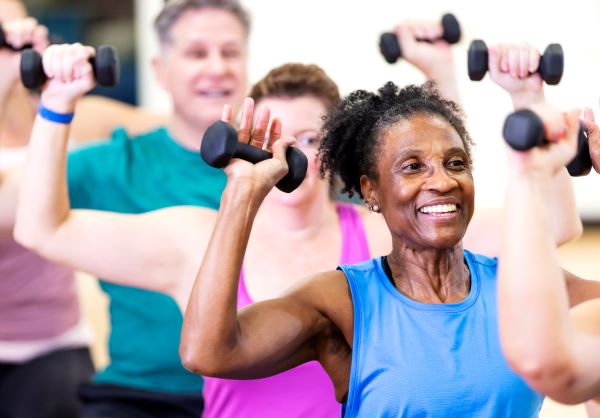
- Lift 3x Per Week
Full-body resistance training:
- Push
- Pull
- Squat
- Hinge
- Carry
- Core stability
Preserve muscle. Protect bone. Stabilize joints. Improve insulin sensitivity.
- Walk Daily
Minimum goal: 20–30 minutes per day.
Zone 2 pace: You can talk, but not sing.
Walking supports:
- Heart health
- Brain perfusion
- Mood
- Metabolic flexibility
3. Eat for Muscle
Each meal should contain:
- High-quality protein
- Fiber
- Stable carbohydrates
- Healthy fats
Prioritize:
- 7–0.8 grams protein per pound of bodyweight (if medically appropriate)
Protein stimulates muscle-building pathways naturally.
- Sleep 7+ Hours
Deep sleep supports:
- Growth hormone pulses
- Tissue repair
- Blood pressure normalization
- Nervous system recovery
Poor sleep suppresses beneficial signaling pathways.
- Maintain Waist Control
Visceral fat drives:
- Inflammation
- Insulin resistance
- Vascular stiffness
Waist circumference matters more than scale weight.
Start Your Customized Exercise Program Today. Send me an email and say that you want to get Simply Fit and I will respond quickly.
besimplyfit23@gmail.com
Be Simply Fit Standard Disclaimer
The information shared by Be Simply Fit and Jim Burns, NASM-CPT, CES, Senior Fitness Specialist, is for educational purposes only and is not intended as medical advice, diagnosis, or treatment. Always consult your physician or qualified healthcare provider before beginning any exercise or wellness program, especially if you have a history of heart disease, stroke, diabetes, neurological conditions, balance concerns, orthopedic limitations, or take medications that affect heart rate or blood pressure. Participation in any exercise program is voluntary and carries inherent risk. Stop immediately and seek medical attention if you experience chest pain, dizziness, unusual shortness of breath, confusion, or other concerning symptoms. By engaging in exercise activities, you assume responsibility for your own health and safety.