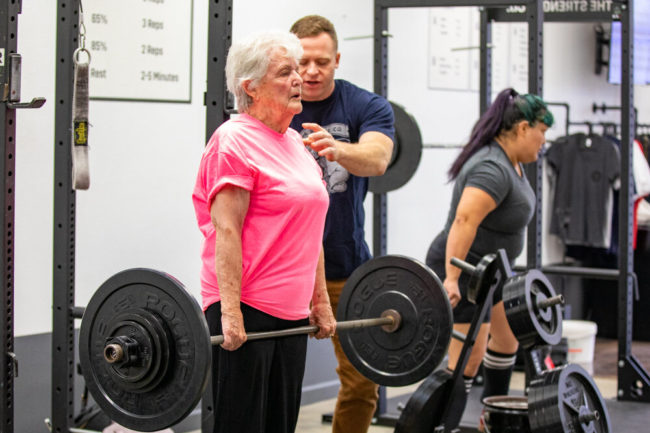
This summary explains how the LIFTMOR study changed how experts think about exercise for osteoporosis—showing that heavy resistance training + impact exercises can safely improve bone density in older women when done correctly and supervised.
What the LIFTMOR Study Actually Did
- Studied postmenopausal women (age ~58+) with low bone density
- Ran for 8 months
- Training was:
- 2x per week
- ~30 minutes per session
- Fully supervised
Core Exercises Used:
- Deadlifts
- Squats
- Overhead press
- Impact loading (jumping)
This is called HiRIT (High-Intensity Resistance + Impact Training)
Key Results
Compared to a lower-intensity group, the LIFTMOR group had:
- Increased bone mineral density (BMD) in:
- Lumbar spine
- Femoral neck (hip)
- Improved strength and function
- Very low injury risk when supervised
This is important because bone loss was once thought unavoidable without meds
Why This Study Was a Big Deal
Before LIFTMOR:
- Experts were cautious about heavy lifting in osteoporosis
- Fear = fractures or injury
After LIFTMOR:
- Heavy lifting is now seen as potentially beneficial and safe (in the right setting)
It flipped the old mindset:
From “be careful and avoid load” → to “apply the right load to build bone”
Important Cautions from the Article
The author emphasizes:
- This is NOT for everyone
- Participants were carefully screened
- Not all individuals with osteoporosis are suitable
- Supervision is critical
- The program was closely monitored by professionals
- Doing this alone = higher risk
- Technique matters more than intensity
Proper form and progression are essential
Practical Interpretation (What It Means)
- Bone responds to load and impact
- Light weights alone may not be enough
- Progressive overload is key for bone growth
But:
- Must be individualized
- Must consider fracture risk, fitness level, and medical history
Bottom Line
- The LIFTMOR study shows that:
- High-intensity strength training can actually build bone
- It can be safe and effective when properly supervised
- However:
- It’s not a DIY program for beginners or high-risk individuals
Quick “Jim Burns” Coaching Translation
This article basically supports what I already teach. I am not a fan of impact loading and would substitute other exercises that load the legs and hips such as weighted stair climbing or beginner level plyometrics.
- Load the body → build the body
- Seniors can (and should) lift heavier—progressively
- But:
- Start where they are
- Progress intelligently
- Prioritize safety + coaching
This summary was taken from: Is LIFTMOR Safe for People with Low Bone Mass, Osteoporosis and Osteopenia?
By Margaret Martin
You can read the full article at this link:
Read another article about Heavy Lifting for Those 70+ Click Below
If You Would Like To Be Trained By Jim Burns Email Him At besimplyfit23@gmail.com