
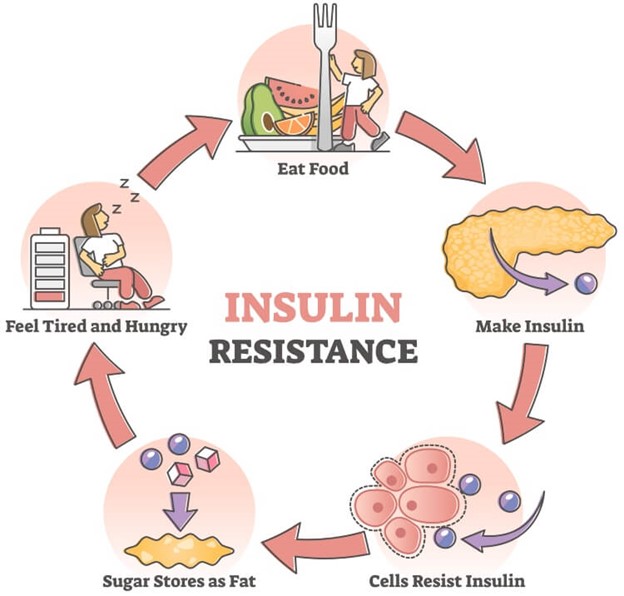
Insulin sensitivity describes how well your body responds to insulin, the hormone that moves sugar (glucose) from your bloodstream into your cells to be used for energy.
Think of insulin like a key 🔑
- Good insulin sensitivity: The key works easily. A small amount of insulin opens the “door,” glucose gets into muscle and liver cells, and blood sugar stays stable.
- Poor insulin sensitivity (insulin resistance): The lock is rusty. The body needs more insulin to do the same job, so blood sugar and insulin levels stay higher for longer.
Why insulin sensitivity matters
When insulin sensitivity is high:
- Blood sugar control improves
- Energy levels are steadier
- Fat storage is reduced
- Risk of type 2 diabetes, heart disease, and cognitive decline is lower
When insulin sensitivity is low:
- Blood sugar stays elevated
- More fat is stored (especially belly fat)
- Inflammation increases
- Risk of diabetes and metabolic disease rises
Muscles are the big player 💪
Skeletal muscle is the largest glucose-using tissue in the body.
- Active, strong muscles soak up glucose with less insulin
- Inactive or weak muscles force the pancreas to work harder
This is why strength training and daily movement are so powerful—especially as we age.
What improves insulin sensitivity (especially after 50)
You don’t need extremes—consistency wins.
- Resistance training (2–3×/week)
Builds insulin-sensitive muscle tissue - Daily walking (especially after meals)
Even 10–15 minutes lowers post-meal blood sugar - Short “micro-workouts”
Frequent movement beats long sedentary days - Adequate protein
Supports muscle and stabilizes blood sugar - Sleep & stress control
Poor sleep and chronic stress raise insulin resistance - Less sugar & refined carbs
Reduces insulin overload
A Be Simply Fit™ way to think about it
“Strong muscles = better glucose control = longer independence.”
Insulin sensitivity isn’t just about diabetes—it’s about energy, longevity, brain health, and staying upright and independent in your later decades.