
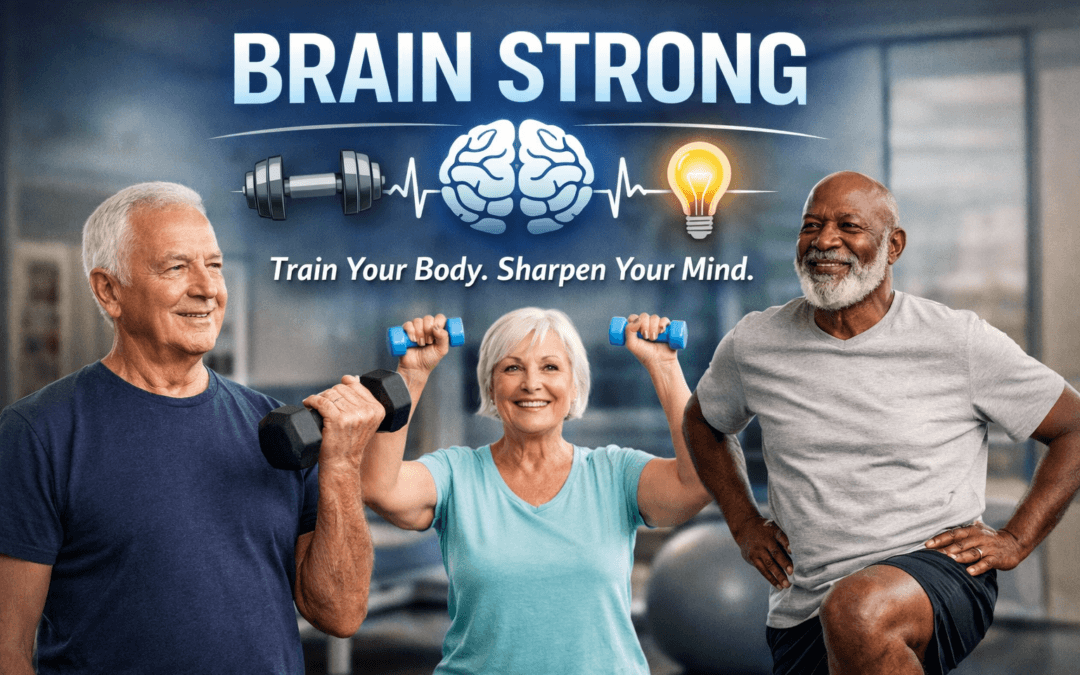
How Movement Protects the Aging Brain
By Jim Burns, NASM-CPT, CES, Senior Fitness Specialist
Be Simply Fit – Manahawkin, NJ
Most seniors worry about losing their memory more than losing their strength.
We talk about heart disease.
We talk about arthritis.
We talk about falls.
But quietly, in the background, many older adults fear something else:
“What if I lose my mind?”
The good news? Cognitive decline is not purely a matter of age.
And one of the most powerful tools we have to protect the brain is something simple, accessible, and already within reach:
Exercise.
What Is Cognitive Decline?
Cognitive decline refers to changes in memory, thinking, reasoning, and processing speed. Some decline is considered a normal part of aging:
- Slower recall
- Difficulty multitasking
- Occasional forgetfulness
However, more serious decline — such as Mild Cognitive Impairment (MCI) or dementia — goes beyond “normal aging.” The question is not whether aging affects the brain.
The other question is:
Can we slow it down?
Research says yes.
The Brain Loves Movement
When you exercise, you are not just training muscles. You are training your brain.
Here’s what happens physiologically:
- Increased Blood Flow
Exercise increases circulation, delivering more oxygen and nutrients to brain tissue.
- BDNF Production
Physical activity stimulates Brain-Derived Neurotrophic Factor (BDNF) — often called “Miracle-Gro for the brain.”
BDNF supports neuron growth, repair, and connectivity.
- Improved Insulin Sensitivity
High blood sugar and insulin resistance are linked to cognitive decline. Strength training and aerobic exercise improve glucose control.
- Reduced Inflammation
Chronic inflammation is associated with neurodegenerative conditions. Exercise helps regulate inflammatory markers.
- Neuroplasticity
The brain remains adaptable throughout life. Exercise enhances the brain’s ability to form new neural pathways.
In short:
Movement keeps the brain adaptable, nourished, and resilient.
The Strongest Research: What Works Best?
Not all exercise affects the brain equally. The best cognitive protection comes from combining multiple types.
- Aerobic Exercise
Brisk walking, cycling, swimming.
Benefits:
- Improves memory
- Enhances executive function
- Increases hippocampal volume (the memory center)
Even 30 minutes of brisk walking 4–5 days per week shows measurable benefits.
- Strength Training
This is often overlooked.
Resistance training improves:
- Attention
- Decision-making
- Processing speed
It also combats sarcopenia (muscle loss), which is strongly correlated with cognitive decline.
Strong body → strong brain.
- Balance & Skill Training
Activities that challenge coordination — such as:
- Step patterns
- Single-leg balance
- Agility drills
- Dance-based movement
These stimulate brain regions responsible for spatial awareness and motor planning. The brain thrives on complexity.
- Social Movement
Group walks.
Partner training.
Community classes.
Social isolation is a major risk factor for cognitive decline. Movement combined with social interaction multiplies the benefit.
Walking Alone Is Not Enough
Walking is excellent. It improves circulation and cardiovascular health.
But walking alone does not challenge:
- Reaction time
- Multi-planar movement
- Strength under load
- Rapid coordination changes
For cognitive resilience, seniors need:
- Load-bearing strength work
- Skill-based movement
- Balance challenges
- Mental engagement during exercise
Think of exercise as cross-training for the brain.
The Fear Factor
Fear of falling.
Fear of injury.
Fear of embarrassment.
Ironically, these fears often lead seniors to become less active — accelerating the very decline they hope to avoid. Confidence is cognitive protection.
When a senior feels physically capable:
- They move more.
- They engage socially.
- They maintain independence.
- They stimulate their brain daily.
What About Alzheimer’s Disease?
Exercise is not a guaranteed prevention for Alzheimer’s. However:
- Physically active individuals show lower risk.
- Exercise may delay symptom onset.
- Fitness improves quality of life even after diagnosis.
The brain responds to lifestyle — even later in life.
It is never too late to start.
A Simple Weekly Brain-Protective Plan
For seniors over 60:
- 3–4 days brisk walking (20–30 minutes)
- 2–3 days strength training (major muscle groups)
- Daily balance challenge (5–10 minutes)
- One social activity involving movement per week
Consistency matters more than intensity.
The “Marginal Decade” Concept
Many people live independently until their early 70s — and then decline rapidly in their last 10–15 years. That final stretch of life is often determined not by genetics, but by physical reserve. Exercise builds that reserve. When strength, balance, and cardiovascular capacity remain high, cognitive function often follows. The brain does not operate in isolation. It depends on the body.
The Bottom Line
Cognitive decline is not solely an aging issue.
It is often a lifestyle issue.
Movement:
- Increases blood flow
- Reduces inflammation
- Improves metabolic health
- Enhances neuroplasticity
- Strengthens confidence
Exercise is not just about living longer. It’s about thinking clearly while you live.
At Be Simply Fit
In my Manahawkin studio, we train for:
- Strength
- Stability
- Confidence
- Independence
- Longevity
Because staying sharp starts with staying strong. If you’re concerned about memory, balance, or maintaining independence, the solution may not be a pill. It may be movement. And it may start today.
Medical Disclaimer
The information provided in this article and in the Brain Strong™ program is for educational and informational purposes only and is not intended as medical advice, diagnosis, or treatment. Participation in any exercise program involves inherent risks. Individuals should consult with their physician or qualified healthcare provider before beginning any new exercise or wellness program, especially if they have a history of cardiovascular disease, neurological conditions, diabetes, balance disorders, orthopedic limitations, or are taking medications that may affect heart rate, blood pressure, coordination, or cognition. Be Simply Fit and Jim Burns, NASM-CPT, CES, Senior Fitness Specialist, do not diagnose, treat, or manage medical conditions. Exercise recommendations are general in nature and may not be appropriate for every individual. If you experience dizziness, chest pain, shortness of breath beyond normal exertion, loss of balance, confusion, or any unusual symptoms during activity, discontinue exercise immediately and seek medical attention. By participating in this program or applying the information provided, you acknowledge that you are doing so voluntarily and assume all responsibility for your health and safety.