I was 68 when I had quadruple bypass surgery. By then, exercise had been part of my life for years. I had lifted weights, run, and played sports because I enjoyed being active. Preparing for heart surgery gave me a different reason to train. I wanted to go into that operation with as much strength and stamina as I could safely bring to it. Looking back, I believe that training helped me recover much sooner than I would have otherwise. It also gave me confidence when it was time to start moving again. Before surgery, walking across a room was something I could take for granted. During recovery, a short walk could be the most important physical thing I did that day. If you’ve ever had to work your way back to doing something you used to do without thinking, you know how much that kind of progress means.
I told that story in I Trained for a Quadruple Bypass. What stays with me is how much it helped to have something I could do while I waited. I could ask questions, pay attention to how I was taking care of myself, and prepare for coming home. (As a matter of information I was diagnosed with blockages in four coronary arteries at 90%. I reached the operating room almost one year after the diagnosis because my angina was stable, and I was asymtomatic, meaning any pain went away after I stopped exercising. When it didn’t go away they discovered that I was 99% blocked. What saved me was the exercise as my heart developed small collateral arteries to support my heart which prevented a heart attack).
Use the time you have before surgery
Once you have a surgery date, it’s natural to think about the operation itself. You’re thinking about the hospital, who’s going with you, and what the surgeon said at the last appointment. I’d add one more question. What can I do between now and then to make the first few days at home easier? The medical term for preparing your body for surgery is prehabilitation, or prehab. If you have a few weeks before a planned operation, your care team can help you decide whether to maintain the activity you’re already doing or work on something specific. If pain or illness has kept you from being active, your starting point might be a few minutes of movement at a time. If you have heart disease or symptoms that limit your activity, talk with your medical team before starting or increasing your exercise. The kind of preparation you need depends on the procedure. Before a hand operation, you might practice getting dressed with one hand and think about how you’ll open containers or prepare a meal. Before a hip replacement, you might ask your physical therapist to show you how to get out of a chair or use a walker. With urgent surgery, you may have very little time. If there’s an opportunity, tell the team what medicines you take, what help you have at home, and what you’re worried about managing once you leave the hospital.
For a hip or knee replacement, work on strength and stamina
As a trainer, I like to ask people what they want to be able to do for themselves. A person preparing for a hip or knee replacement might say, “I want to get out of my chair without someone pulling me up,” or “I’d like to walk to the mailbox again.” Those answers tell me more about what matters to that person than a number on a weight machine ever will. They also give the person and their physical therapist something concrete to work toward.
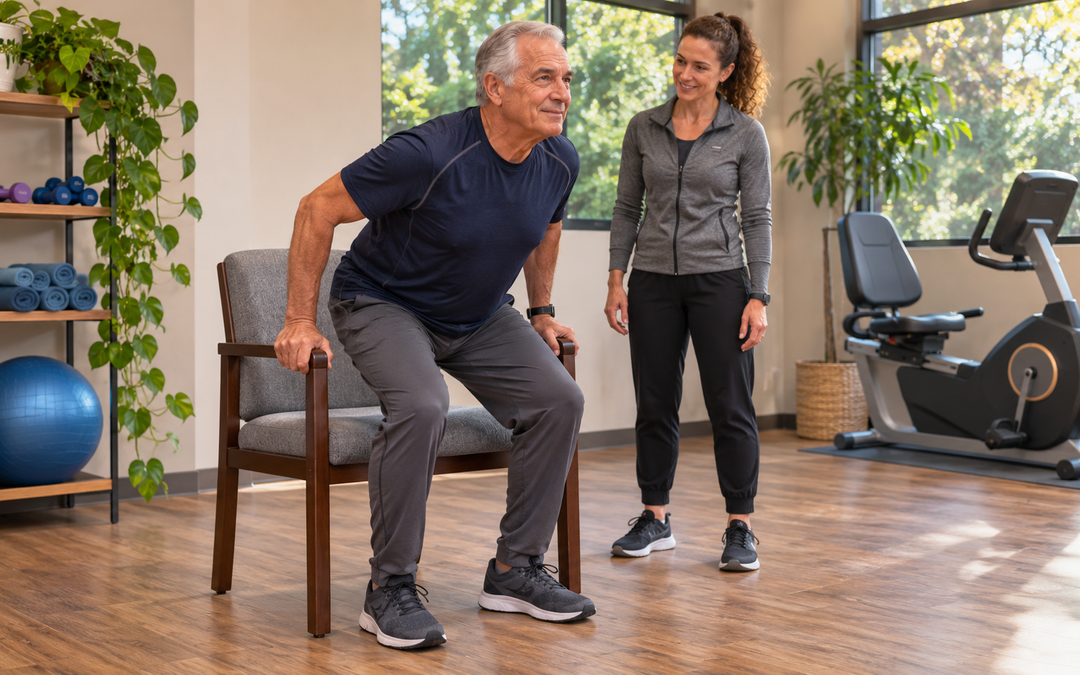
Resistance training helps you maintain the strength you’ll need for everyday tasks. Think about what your legs do when you stand up from a chair. The muscles at the front of your thighs and around your hips help you rise and control the movement when you sit back down. If your physical therapist approves, practicing from a sturdy, higher chair with armrests may be a good place to start. Depending on how your joint moves and feels, your therapist might suggest seated exercises or tightening a muscle while keeping the joint still. Your upper body deserves attention, too. You may need your arms to push up from a chair or use a walker after surgery. Tell your team about any shoulder, wrist, or hand trouble ahead of time. If gripping a walker is difficult now, it’s worth finding out what options you have while there’s time to practice.
Aerobic exercise helps you maintain the stamina you’ll draw on throughout the day. I like the recumbent bike as an option to ask about when walking is uncomfortable. Some people do well with a few minutes on a bike. Others prefer short walks on level ground or movement in a pool, if their care team approves. The right choice is one you can comfortably repeat. If you feel fine while exercising but move worse later that day or the next morning, tell your therapist what happened and ask how to adjust it.
Research suggests that prehab may improve strength and shorten hospital stays for some people having total knee replacement, though the evidence is limited. The research on total hip replacement is less clear about how much prehab changes recovery. I also think about the value of preparation in everyday terms. If I’ve practiced getting up from the chair I’ll use at home or learned how to walk with the aid my team recommends, I have one less unfamiliar task to figure out when I’m tired and sore.
Self-care goes beyond exercise
Before surgery, it’s easy to let an anxious mind run the day. You skip lunch because you’re busy making arrangements. You stay up late looking for answers to a question you could ask at your pre-op visit. I think self-care starts with noticing what’s getting away from you and doing something manageable about it. Give yourself time for regular meals and rest. If you’ve lost weight without trying or haven’t been eating well, tell your surgical team and ask about nutrition support. Bring a list of your medications, vitamins, and supplements, including what you take only occasionally. Ask which ones to take or hold and follow the team’s instructions on when to stop eating and drinking before surgery. If you smoke and want help quitting, bring it up while there’s still time to get support.
Take a walk through your home with recovery in mind. Where will you sit most often? Is there a clear path to the bathroom? Can you reach your phone charger and the things you use every day? Arrange your ride and be specific when you ask for help. “Could you bring dinner the first night?” gives someone a concrete way to pitch in. There’s a mental, emotional, and sometimes spiritual side to getting ready. You can trust your surgeon and still feel nervous. Write down the thing you’re most worried about. For one person it’s pain. For someone else it’s being alone the first night home. Bring it up at your pre-op visit. Talking it through with someone you trust, taking time for quiet reflection, or praying if that’s part of your life can help you settle before the day arrives.
Start with one thing you can do today
My bypass taught me to take responsibility for the things I could influence. I could prepare, speak up when I had a question, and listen to the people taking care of me. I still had to give my body time to heal.
If you have an operation coming up, ask your surgeon or physical therapist, “What can I safely do now that will help me when I get home?” Then take one step. Call the person who’ll drive you home. Put the pre-op instructions where you can find them. If your team has cleared you to exercise, make time for the first short session. Think about what would make that first morning at home a little easier for you, and start there.